


 ปรึกษาฟรี:


 line id: @swcdental


Dental Veneers in Rangsit
Dental veneers are thin restorations attached to the front surfaces of selected teeth. They may be used to adjust tooth colour, shape, proportion, length or the appearance of small spaces between teeth.
Veneer treatment is planned individually. The dentist must evaluate the teeth, gums, bite, existing restorations and the amount of healthy enamel before recommending porcelain veneers, composite veneers or another treatment.
At SWC Dental in Rangsit, the assessment also considers whether the concern can be managed more conservatively with teeth whitening, composite bonding, orthodontic treatment or no immediate treatment.
What Are Dental Veneers?
Dental veneers are thin tooth-coloured restorations placed over the visible front surface of a tooth.
They may be used to change selected aspects of the tooth, including:
- Colour
- Shape
- Length
- Width
- Surface appearance
- Proportion
- The appearance of a small chip
- The appearance of a minor space between teeth
- Limited irregularity in tooth alignment
A veneer covers mainly the front surface of a tooth. This differs from a dental crown, which generally covers most or all of the visible portion of a prepared tooth.
Veneers may be made from porcelain, ceramic or tooth-coloured composite resin. Each material has different preparation, repair, appearance and maintenance considerations.
What Concerns May Veneers Address?
Dental veneers may be considered for selected concerns involving the visible front teeth.
Discoloured teeth
A veneer may cover a tooth that has a colour difference that does not respond predictably to whitening.
Possible causes of discolouration may include:
- Previous dental trauma
- Developmental enamel changes
- Internal tooth discolouration
- Existing restorations
- A tooth that has received root canal treatment
- Staining that does not respond sufficiently to whitening
The cause of the colour change should be assessed before treatment.
If several natural teeth are generally yellow or stained but otherwise healthy, professional teeth whitening may be a more conservative option.
Chipped teeth
A small chip may sometimes be repaired using composite bonding or a veneer.
The suitable treatment depends on:
- Size and location of the chip
- Amount of healthy enamel
- Whether a crack is present
- Biting forces
- Tooth position
- Appearance requirements
- History of repeated fracture
A large fracture or a tooth with extensive structural loss may require an onlay, crown, root canal treatment or another restorative option.
Irregular tooth shape
Veneers may be used to modify selected teeth that appear:
- Short
- Narrow
- Uneven
- Misshapen
- Disproportionate to neighbouring teeth
- Affected by developmental changes
The proposed shape should be planned in relation to the patient’s smile, gums, lips, facial features and bite.
Small spaces between teeth
Veneers may close or reduce the appearance of selected small spaces between teeth.
However, widening teeth to close a space can change their proportions. Orthodontic treatment may be more appropriate when:
- The space is large
- Several teeth are involved
- Tooth positions are significantly uneven
- The bite requires correction
- Closing one space may create an unsuitable tooth shape
- The spacing results from missing teeth or gum disease
Patients may therefore need to compare veneers with braces or clear aligner treatment.
Mild visible misalignment
Veneers may change the visible shape of selected mildly rotated or irregular teeth, but they do not physically move the tooth roots into a new position.
When tooth movement or bite correction is required, orthodontic treatment may be more appropriate.
Worn tooth edges
Veneers or composite restorations may rebuild selected worn front-tooth edges.
The dentist should first investigate possible causes such as:
- Tooth grinding
- Clenching
- Acid erosion
- Bite relationships
- Habits involving hard objects
- Loss of back-tooth support
Restoring the appearance without managing the contributing cause may increase the risk of chipping or fracture.
What Veneers Cannot Treat by Themselves
Veneers are not a solution for every dental concern.
They do not by themselves treat:
- Active tooth decay
- Gum disease
- Dental infection
- Severe tooth fractures
- Missing teeth
- Significant bite problems
- Advanced tooth wear
- Loose teeth
- Extensive loss of supporting bone
- Severe crowding
- Jaw-position problems
- Untreated grinding or clenching
- Pain with an undiagnosed cause
These conditions should be investigated and stabilised before cosmetic restorative treatment is considered.
Types of Dental Veneers
Porcelain veneers
Porcelain veneers are thin restorations produced outside the mouth using records of the prepared teeth.
Depending on the clinical workflow, they may be manufactured through a dental laboratory or a digital dental system.
Possible characteristics include:
- Individual control of shape and shade
- A surface designed to resemble natural enamel
- Greater colour stability than direct composite in many situations
- Ability to modify several visible characteristics
- Requirement for bonding to suitable tooth structure
- Possible need for enamel reduction
- More complex repair if chipped or fractured
- Need for replacement if the restoration can no longer be repaired
Porcelain is a brittle material before bonding. Its performance after placement depends on the material, thickness, bonding surface, preparation, bite and patient habits.
Porcelain veneers should not be described as unbreakable or permanent for life.
Composite veneers
Composite veneers use tooth-coloured resin material applied and shaped directly on the tooth or fabricated indirectly in selected situations.
Possible characteristics include:
- May require less tooth reduction in suitable cases
- Can sometimes be completed in fewer appointments
- May be adjusted or repaired more easily
- Generally has a lower initial cost than porcelain
- May stain or lose surface gloss over time
- May wear or chip
- Requires periodic maintenance and polishing
- Final appearance depends on the material and clinical technique
Composite veneers may be appropriate for limited changes, repairs or cases where a more conservative approach is possible.
They are not automatically reversible, particularly if the tooth has been prepared.
Minimal-preparation veneers
Some cases may allow veneers with limited tooth preparation.
Suitability depends on:
- Existing tooth position
- Tooth colour
- Desired final shape
- Available restorative space
- Enamel thickness
- Bite
- Proposed material
- Whether adding thickness will create an over-contoured result
“Minimal-preparation” does not always mean “no-preparation,” and it should not be assumed that the treatment can be fully reversed.
No-preparation veneers
No-preparation veneers are placed without conventional reduction of the tooth surface in selected cases.
They may be considered when there is adequate space to add material without making the tooth excessively bulky.
Limitations may include:
- Increased tooth thickness
- Over-contoured margins
- Difficulty changing very dark tooth colour
- Limited ability to correct protruding teeth
- Gum irritation if the design is unsuitable
- Restricted control of the final tooth position
Only a clinical assessment can determine whether a no-preparation approach is suitable.
Porcelain Veneers Compared with Composite Veneers
| Topic | Porcelain veneers | Composite veneers |
|---|---|---|
| Material | Dental ceramic or porcelain | Tooth-coloured resin |
| Fabrication | Commonly made outside the mouth | Often shaped directly on the teeth |
| Appointments | Usually requires planning and laboratory stages | May require fewer visits in selected cases |
| Tooth preparation | Depends on the case and design | May require limited preparation |
| Colour stability | Generally more resistant to staining | May stain or lose gloss over time |
| Repair | May be difficult depending on the damage | Often easier to repair |
| Fracture | Can chip or fracture | Can chip, wear or fracture |
| Cost | Generally higher | Generally lower initially |
| Maintenance | Professional review and possible replacement | Polishing, repair or replacement may be needed |
| Suitability | Depends on enamel, bite and goals | Depends on extent of change and material limitations |
Neither type is universally better. The suitable option depends on the tooth condition, desired change, preparation requirements, bite and maintenance expectations.
Veneers Compared with Teeth Whitening
Veneers and whitening address different concerns.
| Topic | Dental veneers | Teeth whitening |
|---|---|---|
| Main purpose | Change visible colour, shape or proportion | Lighten responsive natural teeth |
| Material added | Yes | No permanent restoration is added |
| Tooth preparation | May be required | Normally no tooth preparation |
| Changes tooth shape | Yes | No |
| Effect on existing fillings | Does not lighten them | Does not normally lighten them |
| Maintenance | Restoration review and possible repair | Colour may require future maintenance |
| Reversibility | May be irreversible after preparation | Does not involve permanent restorative coverage |
Patients who mainly want brighter natural teeth may first consider teeth whitening.
Whitening should be planned before veneer shade selection when both treatments are being considered, because veneers do not change colour after placement in the same way as natural teeth.
Veneers Compared with Dental Crowns
A veneer covers mainly the front of the tooth, while a crown generally covers a larger portion of the tooth.
| Topic | Veneer | Dental crown |
|---|---|---|
| Coverage | Mainly front surface | Most or all visible surfaces |
| Main purpose | Selected aesthetic and limited structural changes | Restore or protect a substantially damaged tooth |
| Tooth reduction | Usually more conservative where suitable | Generally requires more preparation |
| Structural support | Limited | Greater coverage of weakened structure |
| Missing tooth replacement | No | An implant crown may replace a missing tooth |
| Suitable for severe damage | Often not | May be considered if the tooth is restorable |
A dental crown may be more appropriate when a tooth has:
- Extensive decay
- A large fracture
- Very little remaining structure
- A large existing restoration
- Structural weakness after selected root canal treatment
- A need for greater coverage
Removing additional healthy structure only to place a crown for a limited cosmetic concern may not always be appropriate.
Veneers Compared with Orthodontic Treatment
Veneers change the visible shape of teeth. Orthodontic treatment moves teeth and roots.
| Topic | Veneers | Orthodontics |
|---|---|---|
| Main effect | Changes tooth surface, shape and visible alignment | Moves teeth into new positions |
| Tooth preparation | May be required | Usually does not require veneer preparation |
| Bite correction | Limited | Can address selected bite and alignment concerns |
| Treatment duration | Depends on restorative process | Tooth movement generally requires more time |
| Restorative material | Added to the teeth | No veneer material added |
| Maintenance | Restoration maintenance | Retainers generally required after treatment |
Patients with significant crowding, rotation, spacing or bite concerns may benefit from orthodontic assessment before considering veneers.
Who May Be Suitable for Dental Veneers?
A patient may be considered for veneer treatment when:
- Teeth and gums are healthy
- Active tooth decay has been treated
- There is sufficient enamel for predictable bonding
- The proposed changes are appropriate for veneers
- The bite can support the restorations
- Expectations are realistic
- Daily oral hygiene is effective
- The patient understands that restorations require maintenance
- Grinding or clenching risks have been assessed
- The patient accepts that some preparations are irreversible
Suitability must be confirmed individually.
When Might Veneers Not Be Recommended?
Veneers may not be suitable, or treatment may need to be delayed, when there is:
- Active gum disease
- Untreated tooth decay
- Insufficient enamel
- Severe tooth wear
- Large existing restorations
- Extensive cracks
- A tooth with an uncertain prognosis
- Significant crowding
- Severe bite problems
- Heavy grinding or clenching
- Poor oral hygiene
- Loose teeth
- Active dental infection
- Expectations that cannot be met predictably
Alternative treatment may include cleaning, whitening, orthodontics, composite bonding, crowns, gum treatment or monitoring.
Veneers and Tooth Grinding
Grinding or clenching may increase the force placed on veneers.
Possible complications include:
- Chipping
- Fracture
- Debonding
- Wear of opposing teeth
- Repeated repair
- Changes in the bite
The dentist may evaluate:
- Wear patterns
- Jaw-muscle symptoms
- Tooth fractures
- Existing restoration damage
- Night-time grinding history
- Bite contacts
A protective appliance may be recommended after treatment in selected patients, but it does not remove every risk.
Veneer Assessment at SWC Dental
1. Discussion of concerns and expectations
The dentist asks what the patient would like to change.
Concerns may involve:
- Tooth colour
- Shape
- Size
- Length
- Chips
- Small spaces
- Visible irregularities
- Previous restorations
- Overall smile proportion
Reference images may help explain preferences, but another person’s result cannot be reproduced exactly because teeth, gums, bite and facial features differ.
2. Examination of teeth and gums
The assessment may include:
- Tooth decay
- Existing fillings
- Cracks
- Enamel thickness
- Tooth wear
- Gum health
- Gum recession
- Tooth mobility
- Tooth position
- Previous root canal treatment
- Available bonding surface
- Existing crown or veneer margins
Active disease should be treated before veneer placement.
3. Bite assessment
The dentist evaluates how the upper and lower teeth contact during:
- Biting
- Chewing
- Forward jaw movement
- Side-to-side movement
Bite contacts can influence veneer length, thickness, material and fracture risk.
4. Photographs and digital records
Planning records may include:
- Facial photographs
- Smile photographs
- Close-up dental photographs
- Intraoral scans
- Conventional impressions
- Bite records
- Dental X-rays where clinically indicated
Dental X-rays are not automatically required solely because veneers are being considered. They may be recommended when the dentist needs to assess decay, roots, previous treatment or another concern.
5. Shade and proportion assessment
The dentist evaluates:
- Natural tooth colour
- Colour of existing restorations
- Tooth proportions
- Symmetry
- Gum levels
- Lip position
- Smile line
- Amount of tooth visible
The proposed shade should be considered in relation to the surrounding teeth and overall appearance.
6. Treatment alternatives
Before treatment, the dentist may discuss:
- No treatment
- Teeth whitening
- Composite bonding
- Orthodontics
- Gum treatment
- Crown treatment
- Replacement of an existing restoration
- Combined treatment
Veneers should not be presented as the only option without discussing reasonable alternatives.
Digital Smile Planning and Trial Designs
Digital photographs, scans, design software, wax-ups or trial restorations may be used to support treatment planning.
These tools can help evaluate:
- Approximate tooth length
- Tooth width
- Shape
- Symmetry
- Smile line
- Lip support
- Space available
- Proposed changes
A digital simulation or mock-up is a communication and planning tool. It does not guarantee that the final result will look exactly the same.
Final appearance may be affected by tooth position, available enamel, gum contours, material limitations and the patient’s bite.
Porcelain Veneer Treatment Process
1. Treatment planning
The dentist confirms:
- Teeth to be treated
- Proposed shape and colour
- Amount of preparation
- Material
- Need for whitening first
- Need for gum treatment
- Temporary restoration requirements
- Number of appointments
- Risks and alternatives
2. Tooth preparation
A controlled amount of tooth structure may be removed to create space and an appropriate surface for the veneer.
The amount depends on:
- Existing tooth position
- Tooth colour
- Desired shape
- Veneer material
- Thickness required
- Bite
- Whether the tooth protrudes
- Whether previous restorations are present
Some cases require minimal preparation, while others require more.
3. Impression or digital scan
A detailed record of the prepared teeth and surrounding tissues is taken.
This may involve:
- An intraoral scanner
- Conventional impression material
- Bite records
- Photographs
- Shade information
4. Temporary veneers
Temporary veneers may be placed when the teeth have been prepared and the definitive veneers are being produced.
Temporary restorations may:
- Protect the prepared surfaces
- Provide an approximate appearance
- Support sensitivity management
- Allow limited evaluation of shape and length
They may not have the same fit, surface, strength or colour as the final veneers.
5. Veneer fabrication
The restorations are produced according to the clinical records and prescription.
The fabrication method depends on the selected ceramic, laboratory and digital workflow.
6. Trial placement
Before bonding, the dentist may evaluate:
- Fit
- Shape
- Length
- Shade
- Relationship with neighbouring teeth
- Gum margins
- Bite
Small adjustments may be possible. Significant changes may require further laboratory work.
7. Bonding
The tooth and veneer surfaces are prepared according to the bonding system.
The veneer is positioned with resin cement and the material is cured.
Excess cement is removed, contacts are checked and the bite is evaluated.
8. Review
A follow-up appointment may be recommended to review:
- Gum response
- Bite
- Sensitivity
- Cleaning
- Appearance
- Patient adaptation
Composite Veneer Treatment Process
Composite veneers may be completed directly on the teeth in selected cases.
The process may include:
- Examination and shade selection
- Limited preparation where required
- Conditioning of the tooth surface
- Application of bonding material
- Layering of composite resin
- Shaping tooth contour and proportion
- Light curing
- Finishing and polishing
- Bite adjustment
- Review and maintenance planning
Composite may also be used for small additions or repairs rather than covering the complete front surface of every tooth.
Does Getting Veneers Hurt?
The treatment experience depends on the number of teeth, preparation, gum condition and individual sensitivity.
Local anaesthesia may be used when tooth preparation could cause discomfort.
After treatment, some patients may experience temporary:
- Sensitivity to cold
- Gum tenderness
- Awareness of the new tooth shape
- Mild bite discomfort
- Sensitivity around temporary veneers
Persistent pain, increasing sensitivity, swelling or difficulty biting should be assessed.
Veneer treatment should not be advertised as completely painless.
Are Veneers Reversible?
The answer depends on whether the natural tooth has been altered.
If enamel is removed to prepare the tooth, that tooth structure does not grow back. The tooth will generally continue to require a veneer or another suitable restoration.
Even minimal-preparation treatment may involve irreversible surface modification.
A no-preparation restoration may preserve more tooth structure, but removal can still affect the tooth surface or require further treatment.
Veneers should therefore not be described as temporary accessories that can always be removed without consequence.
Do Veneers Damage Natural Teeth?
Veneer treatment intentionally alters the tooth surface in many cases.
When appropriately planned, the objective is to preserve as much healthy structure as possible while providing sufficient space and bonding conditions.
Potential concerns may include:
- Loss of enamel
- Sensitivity
- Gum irritation
- Chipping
- Debonding
- New tooth decay
- Need for root canal treatment in some cases
- Need for repair or replacement
- Difficulty matching a single veneer over time
The dentist should discuss the expected preparation and risks before treatment.
Can Teeth Decay Under Veneers?
The porcelain or composite material itself does not develop tooth decay, but the natural tooth can still develop decay around the veneer margin or on uncovered surfaces.
Risk may increase with:
- Ineffective brushing
- Lack of interdental cleaning
- Frequent sugar intake
- Dry mouth
- An unsuitable veneer margin
- Plaque accumulation
- Smoking
- Missed dental reviews
Daily cleaning and professional assessment remain necessary.
Do Veneers Stain?
Porcelain generally has greater resistance to surface staining than composite resin, but no restoration should be described as completely stain-proof.
Staining or colour differences may occur because of:
- Surface damage
- Plaque accumulation
- Staining at restoration margins
- Composite discolouration
- Changes in neighbouring natural teeth
- Gum recession
- Changes in the underlying tooth
- Smoking
- Frequent consumption of strongly coloured foods or drinks
Porcelain veneers cannot be whitened in the same way as natural teeth.
Can Veneers Chip or Fall Off?
Veneers can chip, fracture or become debonded.
Possible contributing factors include:
- Grinding or clenching
- Biting hard objects
- Nail biting
- Trauma
- Inadequate enamel bonding
- Tooth decay
- Bite changes
- Material fatigue
- Damage to the supporting tooth
A damaged veneer may sometimes be repaired, but replacement may be required depending on the material and extent of damage.
How Long Do Veneers Last?
There is no fixed lifespan that applies to every veneer.
Longevity depends on:
- Material
- Remaining enamel
- Preparation and bonding
- Bite
- Grinding or clenching
- Oral hygiene
- Gum health
- Tooth decay
- Diet and habits
- Trauma
- Maintenance
- Condition of the supporting tooth
Veneers may function for many years when appropriately planned and maintained, but they should not be presented as lifetime restorations.
Caring for Dental Veneers
After veneer treatment:
- Brush twice daily with fluoride toothpaste
- Clean between the teeth every day
- Attend professional cleaning appointments
- Avoid biting fingernails
- Avoid opening packages with the teeth
- Avoid chewing ice or very hard objects
- Report a loose or chipped veneer
- Seek assessment if the bite feels uneven
- Use a prescribed protective appliance when recommended
- Maintain the health of the gums
- Limit frequent sugary foods and drinks
- Avoid smoking and tobacco products
The veneer margins and uncovered tooth surfaces require the same attention as natural teeth.
Cleaning Around Veneers
Use a soft toothbrush and clean carefully along the gum line.
Interdental cleaning remains important because plaque may accumulate between veneered teeth.
Depending on the spaces, the dental team may recommend:
- Dental floss
- Interdental brushes
- Another suitable interdental aid
- Professional polishing for composite veneers
Do not avoid cleaning around a veneer because of fear that flossing will remove it. A properly bonded veneer should allow appropriate daily cleaning.
When Should You Contact the Dentist?
Arrange an assessment if you notice:
- Increasing or persistent pain
- Sensitivity that does not improve
- A veneer that feels loose
- A chip or fracture
- A change in the bite
- Gum swelling or bleeding
- A dark line or change at the margin
- Food trapping between teeth
- A bad taste or discharge
- Trauma to a veneered tooth
- A veneer that feels rough
- A change in tooth colour beneath the veneer
A loose veneer should not be reattached with household glue.
Dental Veneers in Rangsit at SWC Dental
SWC Dental provides dental veneer assessment for patients in Rangsit, Pathum Thani and nearby areas, including Thanyaburi, Khlong Luang, Lam Luk Ka and Don Mueang.
The assessment considers:
- Tooth and gum health
- Existing restorations
- Tooth position
- Enamel available for bonding
- Bite
- Tooth colour and shape
- Grinding or clenching
- Patient expectations
- Alternative treatments
- Long-term maintenance
Depending on the findings, treatment options may include:
- Porcelain veneers
- Composite veneers
- Composite bonding
- Teeth whitening
- Dental crowns
- Braces
- Clear aligners
- Gum treatment
- Professional teeth cleaning
- Full mouth rehabilitation
The suitable material, number of teeth, preparation, appointments and fees depend on the examination and individual treatment plan.
Frequently Asked Questions About Dental Veneers
What is the difference between porcelain and composite veneers?
Porcelain veneers are ceramic restorations commonly fabricated outside the mouth. Composite veneers use tooth-coloured resin and may be shaped directly on the teeth. They differ in preparation, appearance, repair, staining and cost.
Do veneers require shaving the teeth?
Many veneer cases require some tooth preparation, but the amount varies. Some cases may be suitable for minimal or no preparation, while others require greater reduction to achieve an appropriate shape and thickness.
Are veneers permanent?
Veneers are not permanent for life. However, treatment may be irreversible when enamel has been removed because the tooth will continue to require restorative coverage.
Can veneers fix crooked teeth?
Veneers may change the visible shape of mildly irregular teeth, but they do not move the roots or correct every bite problem. Orthodontic treatment may be more appropriate for significant misalignment.
Can veneers close gaps?
Veneers may close selected small gaps by changing tooth width. Larger or multiple spaces may require orthodontic or other restorative assessment.
Can veneers become stained?
Porcelain is generally more stain-resistant than composite, but margins, neighbouring teeth and composite restorations may change colour over time.
Can teeth decay beneath veneers?
Yes. Natural tooth structure around or beneath a veneer can still develop decay. Daily oral hygiene and regular dental assessment remain necessary.
Do veneers hurt?
Local anaesthesia may be used during tooth preparation. Temporary sensitivity or gum tenderness may occur, but the experience varies between patients.
Can veneers be removed?
A veneer can be removed by a dentist, but if natural enamel was reduced, the tooth cannot simply return to its original untreated condition.
How many veneers do I need?
The number depends on which teeth are visible in the smile, tooth proportions, colour differences, treatment goals and whether neighbouring teeth can be managed with whitening or another treatment.
Do all front teeth need veneers?
No. Treatment may involve one tooth, selected teeth or a wider group. Healthy teeth should not automatically be restored only to create a uniform number.
Can I whiten veneers?
Whitening products do not normally lighten porcelain or composite veneers in the same way as natural teeth. Whitening should be planned before final veneer shade selection where appropriate.
Book a Dental Veneer Assessment
If you are concerned about the colour, shape, chips, small gaps or proportions of your front teeth, arrange a veneer assessment at SWC Dental in Rangsit.
The dentist will examine your teeth, gums, enamel and bite before discussing porcelain veneers, composite veneers, whitening, orthodontics or another suitable option.
View the dental treatment fees or contact SWC Dental to arrange an appointment.
Dental veneers are are bonded to the front of the teeth. They can be used to fix chipped, stained, misaligned, worn down, uneven or abnormally spaced teeth.

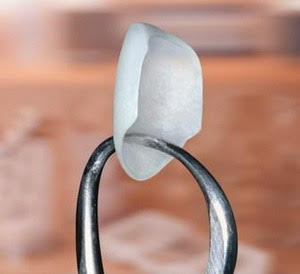
Types of Dental Veneers
1. Porcelain veneers that are fabricated in a dental laboratory are bonded to the teeth with resin cement. Porcelain material is brittle; however, when it is firmly bonded to the tooth it can become very strong and durable.
2. Composite veneers can also be fabricated by the dentist inside your mouth at a dental office.
|
Pro |
Con |
|
Easily Whiten Your Smile – Veneers are largely stain-resistant. |
High Cost – The price of veneers will vary based on your location, your dentist and the number of teeth you want restored. |
|
Fix Minor Cosmetic Problems – Slightly crooked or gapped teeth |
Increased Sensitivity – you may feel sensitivity to hot or cold temperatures for the first few days after your procedure, but it usually goes away |
|
Replace Damaged Enamel – Veneers are an excellent treatment for teeth with enamel abrasion or enamel erosion |
Irreversible Procedure – Veneers are considered permanent because your dentist needs to change the structure of your natural teeth to properly place them |
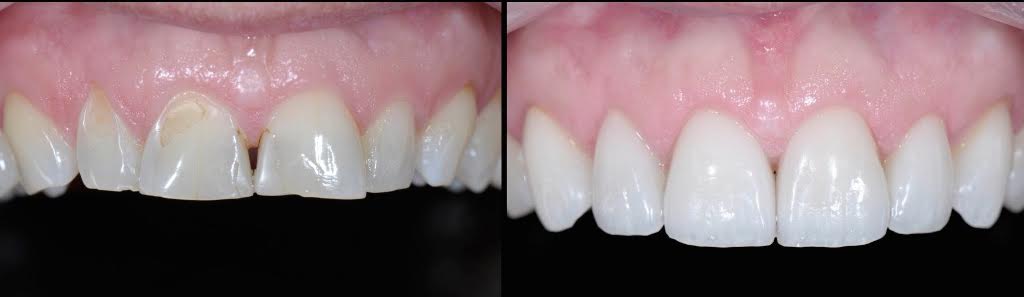
Dental veneers are an excellent way to hide discolored, crooked or damaged teeth, but it’s important to weigh the pros and cons that come with the territory before getting them. Make an appointment with your dentist to find out if dental veneers are a fitting solution for you.
Comparison between porcelain veneers and composite resin veneers
|
Porcelain Veneers (thin shell that is custom-made to fit on the tooth.) |
Composite resin veneers A composite resin veneer is made from a tooth-colored filling material bonded to the tooth. |
| They are strong and long-lasting |
Usually less tooth enamel needs to be removed than for crowns or porcelain veneers |
| They have a natural-looking surface |
May mean fewer visits to the dentist—sometimes these veneers take just one visit |
| L ess tooth enamel needs to be removed than with a crown or cap |
Cost less than porcelain veneers |
| They don’t stain easily |
Are easy to fix if they get damaged; although composite veneers are generally not as strong or wear-resistant as porcelain veneers, composite veneers can be repaired easily and quickly |
Before you get veneers
- Your teeth and gums must be healthy before you get veneers. Your dentist can treat any disease or decay before your veneers are placed.
- Veneers are not always a good choice for patients who clench or grind their teeth, because the thin veneers may chip or break. If you clench or grind your teeth, your dentist may suggest you wear a plastic dental night guard while sleeping.
- Although your dentist removes as little tooth enamel as possible for veneers, the process cannot be undone once the enamel is removed.
- It is possible for veneers to come loose over time. In that case, new ones might be needed.
- As with all your dental care, discuss all your expectations and treatment options with your dentist. Regular dental visits are a must for keeping your teeth and gums healthy.
How are Dental Veneers Placed?
The dentist would remove a small amount of the tooth surface to permit placement of the veneer. An impression is taken of the tooth and sent to the dental laboratory. The dental veneer is then made to fit the tooth and mouth. The veneer is bonded to the tooth with resin cement.
After you get veneers
- Veneers can chip or break under pressure. Avoid biting your fingernails and chewing on hard objects, such as pencils or ice.
- It may take you a few days to get used to the feel of your veneers. But do let your dentist know if your bite does not feel right after the veneer has been placed. He or she will correct it before you leave the office.
- Keep your teeth and gums clean by brushing and flossing each day. You can still get cavities under or around veneers. Look for dental care products that show the American Dental Association’s Seal of Acceptance. This says that a product has met ADA standards for safety and effectiveness.


